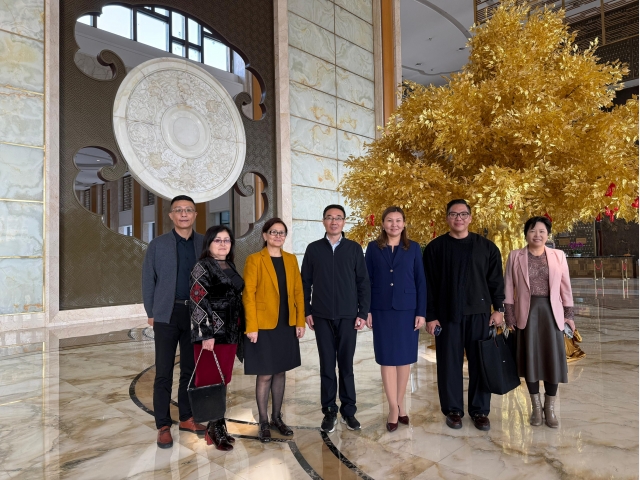
The Kazakh National Women’s Teacher Training University (QyzPU) continues to expand the horizons of its international cooperation by signing a Memorandum of Understanding (MoU) with Lianyungang Technical College (China). This agreement marks an important step in developing educational and scientific partnership within the framework of the “One Belt, One Road” initiative.
According to the memorandum, the two institutions plan to launch a new joint educational program — “Chinese Language + Chemistry.” The goal of the project is to train specialists who combine linguistic and scientific competencies that are in high demand in the international labor market.
The program represents an innovative model that integrates academic education with professional training. Participants will be able to earn microcredential certificates recognized by both universities, as well as complete internships and gain employment opportunities through industrial partners.
The official signing ceremony took place in Lianyungang, China. The event was attended by Yerkin Zhumankulova, Vice-Rector for Social Development and Student Affairs; Professor Gauhar Baytashova, Director of the Institute of Natural Sciences; Saltanat Zhakubaeva, Head of the Department of International Cooperation; as well as representatives of Lianyungang Technical College and the International Center for Cultural Connections Malaysia (ICCCM).
Speaking at the ceremony, Saltanat Zhakubaeva, Head of the Department of International Cooperation at QyzPU, emphasized:
“The ‘Chinese Language + Chemistry’ program is a vivid example of a new-generation partnership within the ‘One Belt, One Road’ initiative. This project creates a strong link between education, innovation, and industry, providing our students with real opportunities for professional growth and international experience.”
The new program aims to strengthen educational and scientific ties between Kazakhstan and China, while fostering mutual understanding and friendship between the two nations. The signed memorandum opens a new stage of academic cooperation between the universities of both countries, contributing to the internationalization of higher education and the successful implementation of the ‘One Belt, One Road’ initiative.